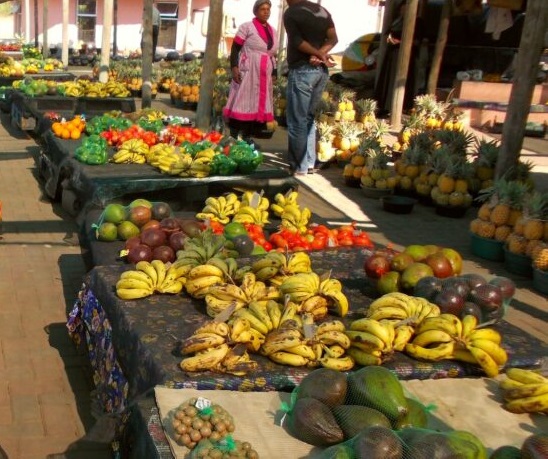
SME Survey: Rising Prices, Increased Cost Of Inputs, and Lack of Finance Raise Danger for Global Food Systems
September 14th, 2022 – Food is becoming much more expensive. Ukraine, Russia, and Belarus are collectively major producers of wheat, maize, sunflower oil, natural gas, and fertilizers, and the Russian invasion of Ukraine has jeopardized that production and exportation. This has interacted with climate shocks and the lingering impacts of the pandemic on supply chains to result in alarming increases in food prices.
Severe challenges for small businesses
Weathering these peaks and volatility is challenging for rich countries and large corporations. But it’s much harder in low- and middle-income countries (LMICs), for the small- and medium-sized enterprises (SMEs) which make up the bulk of the food system. A recent online survey by The Scaling Up Nutrition (SUN) Business Network, which is convened by the World Food Programme (WFP) and GAIN, ran a survey to find out what they’re facing and how they are coping.
Well over 200 owners and/or managers of food system SMEs in 12 countries in Africa and Asia provided their feedback. Over a third of responses came from women-owned businesses and a further 30 percent from youth-owned businesses.
From the responses, it is abundantly clear that SMEs are feeling the pressure. 79 percent reported that high or volatile prices were a current challenge for their business, with about a third ranking this as their main challenge. Nearly one fifth said high prices were having such a severe impact on their business that it risked closure. And firms led by women and young people were particularly likely to cite rising prices as a top contextual challenge.
Most firms estimated that prices for their inputs had increased by over 30 percent in the past six months. About two-thirds of firms also reported changes to input availability since the start of 2022, with 68 percent of them reporting a decrease in availability.
Written by FoodTank
Related Post

EU Single Market Report Flags Persistent...
The European Commission has published its sixth Annual Single Market and Competitiveness Report, drawing on 29 key performance indicators to...

South African SMEs: Navigating the Path...
The State of South African Small Business 2025 report highlights that SMEs are increasingly the backbone of the national economy, with 83% r...
Energy Prices and Their Impact on...
The structural disparity in electricity costs when compared to the European average is a growing concern for micro and small businesses thro...