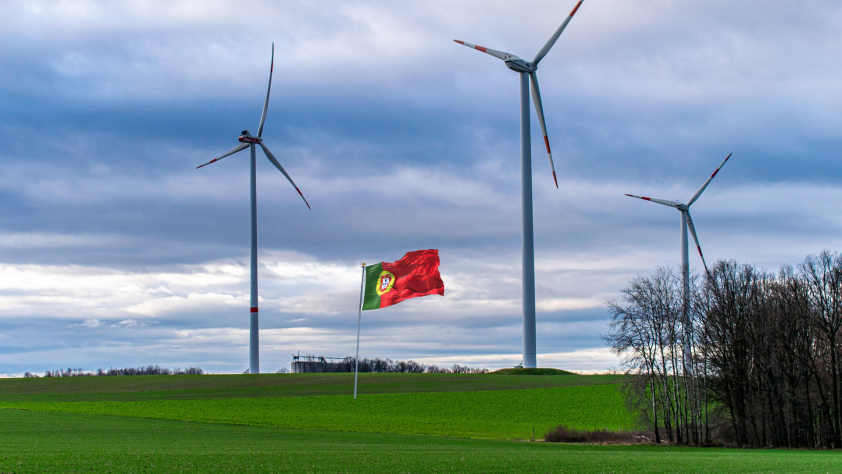
The Green Transition of SMEs and Entrepreneurship in Portugal
At the end of September was published a project funded by the European Union and implemented by the OECD. It provides an assessment of Portugal’s policies to support the green transition of SMEs and green entrepreneurship, as well as of the progress of Portuguese SMEs towards climate neutrality in the last fifteen years.
Green growth has long been a policy priority of OECD member countries. The 2015 Paris Agreement on climate change, which set the goal of keeping global warming well below 2°C compared to pre-industrial levels, marked a pivotal moment, further accelerating global efforts toward sustainable and climate-resilient development. Portugal has made major headways in the reduction of greenhouse gas (GHG) emissions over the last two decades. After reaching a peak in 2005, Portugal’s GHG emissions in 2023 were back to the levels of the early 1990s, mostly thanks to the withdrawal of coal-generated electricity and the development of renewable energy sources in the energy sector. According to OECD estimates (OECD, 2023), Portuguese SMEs accounted for 56% of all business-sector GHG emissions, almost twenty percentage points higher than the EU average (37%), in large part mirroring their larger share of economic activity.
The report is the first in-depth country review of the OECD Centre for Entrepreneurship, SMEs, Regions and Cities (CFE) that focuses on the green transition of SMEs and green entrepreneurship in a member country (Portugal).
Survey evidence shows that fewer SMEs in Portugal than in the rest of the EU take specific climate-neutrality actions, such as reducing carbon emissions and developing or purchasing carbon-reduction technologies. Similarly, the proportion of SMEs committed to resource efficiency measures is lower in Portugal than in the rest of the EU. While the immediate cost is reportedly a barrier to Portuguese SMEs, the evidence suggests that these actions lead to major savings over the longer-term.
Related Post

EU Single Market Report Flags Persistent...
The European Commission has published its sixth Annual Single Market and Competitiveness Report, drawing on 29 key performance indicators to...
South African SMEs: Navigating the Path...
The State of South African Small Business 2025 report highlights that SMEs are increasingly the backbone of the national economy, with 83% r...
Energy Prices and Their Impact on...
The structural disparity in electricity costs when compared to the European average is a growing concern for micro and small businesses thro...